What Are Functional Mushrooms? The Complete Beginner's Guide
Functional mushrooms aren't just food. They're a class of fungi with documented biological effects on your brain, immune system, and cellular energy — effects backed by decades of clinical research. Here's everything you need to know to get started.
What Makes a Mushroom 'Functional'?
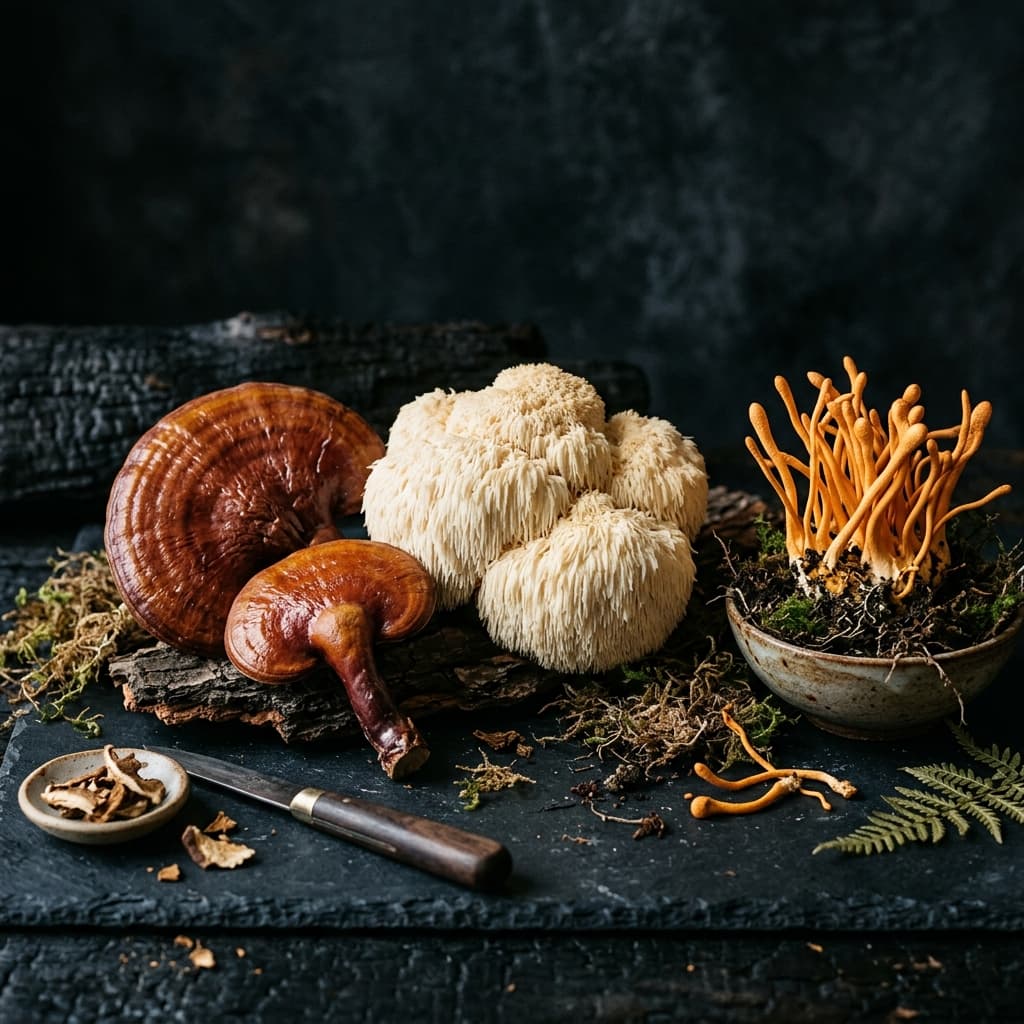
The term 'functional mushroom' refers to fungi species that contain bioactive compounds with demonstrated health effects beyond basic nutritional value. While a button mushroom provides protein, B vitamins, and minerals (nutrition), functional mushrooms like Lion's Mane, Reishi, and Cordyceps contain unique compounds — beta-glucans, triterpenes, hericenones, cordycepin — that interact with specific biological systems in ways that have been documented in clinical research.
The functional mushroom category is sometimes called 'adaptogenic mushrooms' or 'medicinal mushrooms,' though these terms have distinct meanings. Adaptogens specifically refer to substances that help the body regulate its stress response — Reishi and Cordyceps are classified as adaptogens. Not all functional mushrooms are adaptogens (Chaga is primarily antioxidant, Lion's Mane is primarily neuroactive), but all adaptogens in this category are functional mushrooms.
How Functional Mushrooms Differ from Culinary Mushrooms
Culinary mushrooms — button mushrooms, cremini, portobello, oyster — are primarily food. They're nutritious, delicious, and contain some beta-glucans, but their active compound concentrations are lower and their specific bioactive profiles don't produce the same clinical effects as functional species.
Functional mushrooms are typically not pleasant to eat as food (many are too woody, bitter, or rare), but they contain dramatically higher concentrations of the specific compounds that produce measurable biological effects. This is why they're typically consumed as concentrated extracts — either dried powder, capsules, or tinctures — rather than as whole mushrooms.
The 8 Most Important Functional Mushroom Species
The functional mushroom category includes dozens of species, but a core group of 8 has accumulated the most clinical research and consistent use across cultures.
Lion's Mane (Hericium erinaceus): The Brain Mushroom
Lion's Mane is the most studied functional mushroom for cognitive effects. Its unique compounds — hericenones (in the fruiting body) and erinacines (in the mycelium) — stimulate Nerve Growth Factor (NGF) synthesis in the brain. NGF is a protein critical for the growth, maintenance, and survival of neurons. No other known natural substance stimulates NGF production with the specificity and potency of Lion's Mane.
Clinical research: A 2009 randomized controlled trial found significant cognitive improvements in adults 50–80 who supplemented with Lion's Mane for 16 weeks vs. placebo. The effects declined after supplementation stopped, suggesting the benefits are dependent on ongoing use.
Cordyceps (Cordyceps militaris / sinensis): The Energy Mushroom
Cordyceps supports ATP (adenosine triphosphate) production — the molecular energy currency used by every cell in your body. Its primary active compound, cordycepin, interacts with cellular energy pathways and improves oxygen utilization efficiency. Multiple randomized controlled trials have shown Cordyceps supplementation improves VO2 max and time-to-exhaustion in both trained and recreational adults.
Modern Cordyceps supplements use Cordyceps militaris — a cultivated species with comparable cordycepin levels to the rare (and extremely expensive) wild-harvested Cordyceps sinensis.
Reishi (Ganoderma lucidum): The Stress Mushroom
Reishi is the world's most studied adaptogen and has been used in traditional Chinese medicine for over 2,000 years. Its 400+ bioactive compounds include ganoderic acid triterpenes that modulate the HPA (hypothalamic-pituitary-adrenal) axis — the system that controls cortisol production. Reishi supports healthy cortisol regulation, immune balance, and sleep quality through its effects on the stress response system.
Turkey Tail (Trametes versicolor): The Immune Mushroom
Turkey Tail is probably the most clinically researched medicinal mushroom in the world, particularly for its polysaccharides PSK (Krestin) and PSP. PSK has been used as an approved cancer adjunct immunotherapy in Japan since 1977, with over 400 peer-reviewed studies documenting its immune effects. Turkey Tail also has well-documented prebiotic effects, selectively enriching beneficial Bifidobacterium and Lactobacillus species in the gut.
Chaga (Inonotus obliquus): The Antioxidant Mushroom
Chaga is not technically a mushroom — it's a fungal conk that grows parasitically on birch trees in cold northern climates. Its defining feature is its extraordinary antioxidant capacity: an ORAC score of approximately 1.5 million per 100g — compared to 4,600 for blueberries. This is due to its high melanin content, superoxide dismutase (SOD) enzyme activity, and betulinic acid compounds absorbed from birch trees.
Why Quality Varies So Much Between Brands
The functional mushroom supplement market has a significant quality problem. The core issue: most supplements use 'mycelium on grain' production — growing the mushroom's root system (mycelium) on oats or rice, then grinding and drying the entire mixture, including the grain substrate.
The result: products that are primarily grain starch with a small percentage of actual mushroom material. Independent lab testing of common commercial mushroom supplements has found beta-glucan content as low as 0.3–2% in mycelium-on-grain products, compared to 20–40% in quality fruiting body extracts.
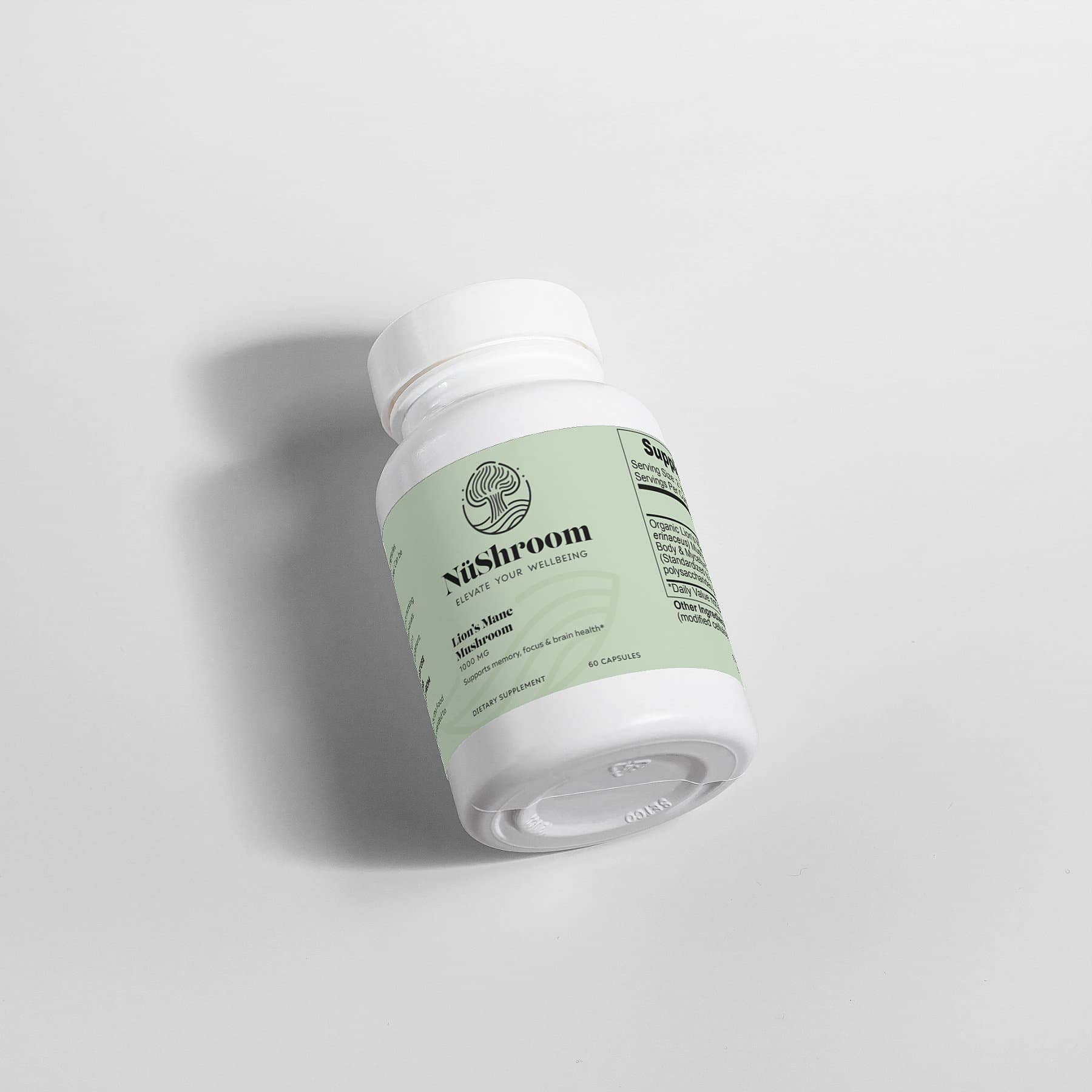
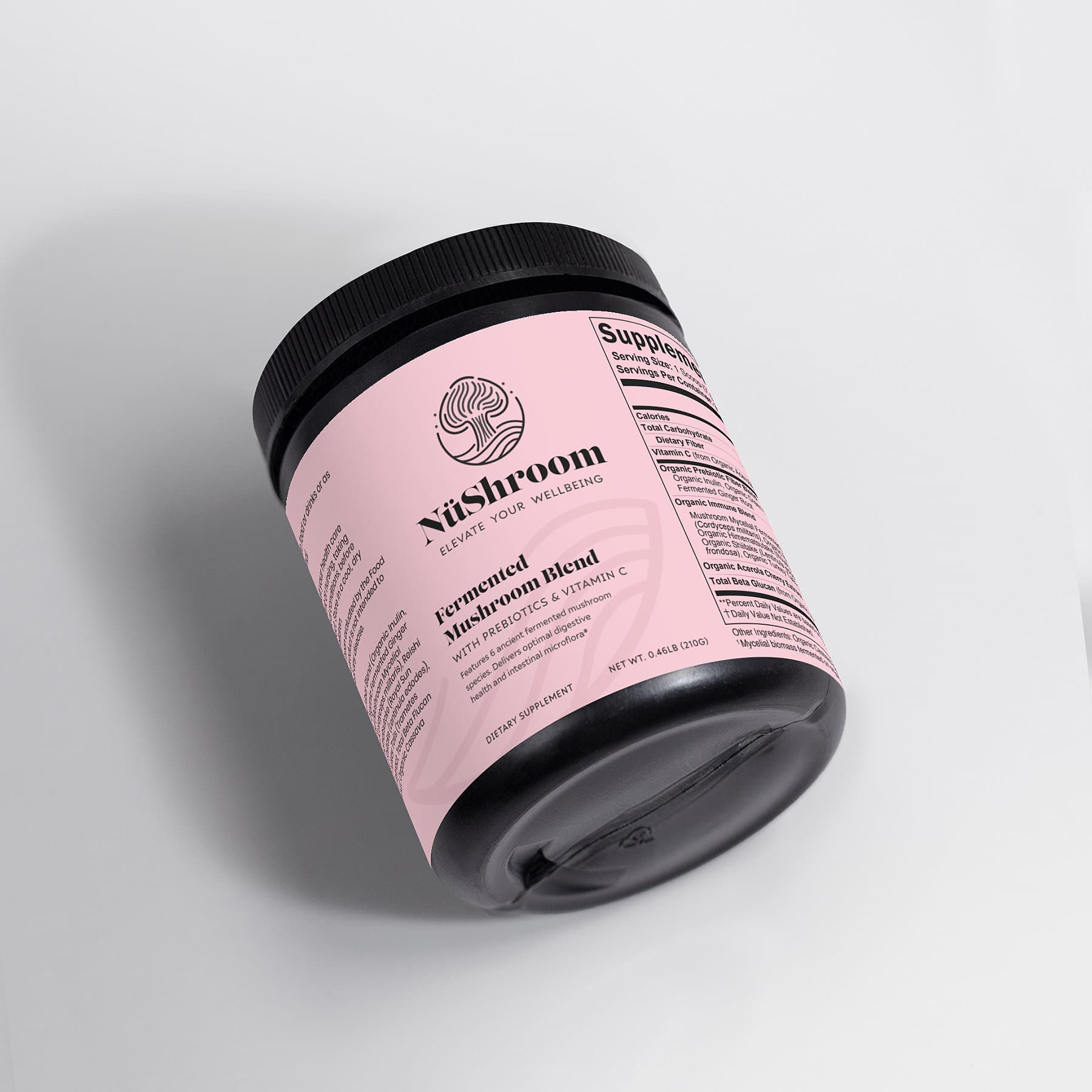
Premium brands like NüShroom use exclusively fruiting body extracts — the actual mushroom cap and stem, where active compounds are most concentrated. They also use dual extraction (hot water + alcohol) to unlock both water-soluble and fat-soluble compounds, and some (including NüShroom's Fermented Superblend) apply a secondary fermentation step that further increases bioavailability.
How to Choose a Functional Mushroom Supplement
When evaluating a functional mushroom supplement, look for these key indicators:
1. Fruiting body specification — The label should specify '100% fruiting body' or 'fruiting body extract.' If it just says 'mushroom powder' without specifying, assume mycelium on grain.
2. Beta-glucan percentage — Quality extracts should specify the beta-glucan percentage. Look for 20%+ for a clinical-grade product. If the brand doesn't disclose this, be skeptical.
3. Third-party testing — Reputable brands provide Certificates of Analysis (COAs) from independent ISO-certified labs, verifying potency, heavy metals, pesticides, and microbial safety.
4. Extraction method — Dual extraction (hot water + alcohol) provides the most complete active compound profile. Hot water extraction alone is acceptable for beta-glucan focused products.
5. No proprietary blends — If the label lists 'mushroom blend' without disclosing individual amounts, you can't evaluate whether therapeutic doses are present.
How to Take Functional Mushrooms
Functional mushrooms are most effective as a consistent daily habit rather than occasional supplementation. Active compounds — particularly Lion's Mane NGF stimulation and Reishi HPA axis modulation — build up over weeks rather than providing instant acute effects (though some users notice benefits within days).
Most clinical studies documenting benefits ran for 4–16 weeks. The general recommendation: take daily for at least 4 weeks before evaluating results. Stopping use generally causes benefits to gradually diminish, confirming they were from the supplement rather than placebo.
Functional mushrooms can be taken at any time of day. Most users find morning or early afternoon most practical and consistent.
Frequently Asked Questions
Are functional mushrooms safe to take every day?
Yes. The major functional mushroom species (Lion's Mane, Cordyceps, Reishi, Turkey Tail, Chaga, Maitake, Shiitake) are all considered safe for daily long-term use in normal supplemental doses. They are food-grade natural substances, not pharmaceuticals, and have centuries of traditional use alongside decades of modern safety research.
Do functional mushrooms interact with medications?
Functional mushrooms are generally well-tolerated alongside most medications. However, because some mushrooms (particularly Reishi and Turkey Tail) have immune-modulating effects, those on immunosuppressant medications should consult a healthcare professional. Reishi may also have mild blood-thinning effects at high doses. Always consult a healthcare professional if you're taking prescription medications.
How long does it take for functional mushrooms to work?
It depends on the mushroom and the benefit. Some users notice improved energy or focus within days of starting Cordyceps or Lion's Mane. The most robust and sustained benefits — particularly cognitive improvements from Lion's Mane, stress adaptation from Reishi, and immune support from Turkey Tail — typically build over 2–4 weeks of consistent daily use.