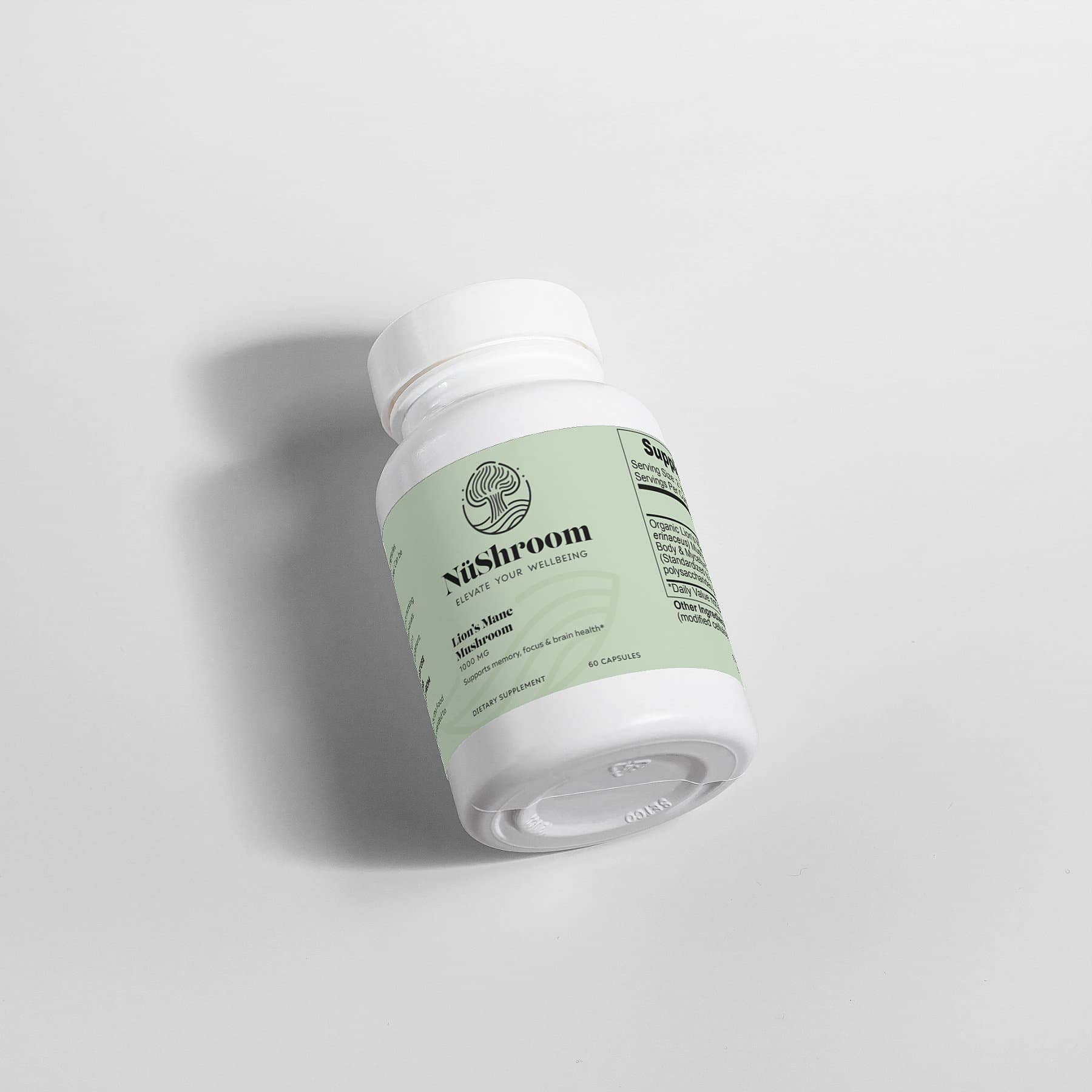
Mycelium vs. Fruiting Body: The Supplement Industry's Dirty Secret
Most mushroom supplements contain very little actual mushroom. Here's the production shortcut that's costing consumers potency — and how to spot it.
The Basics: Fruiting Body vs. Mycelium
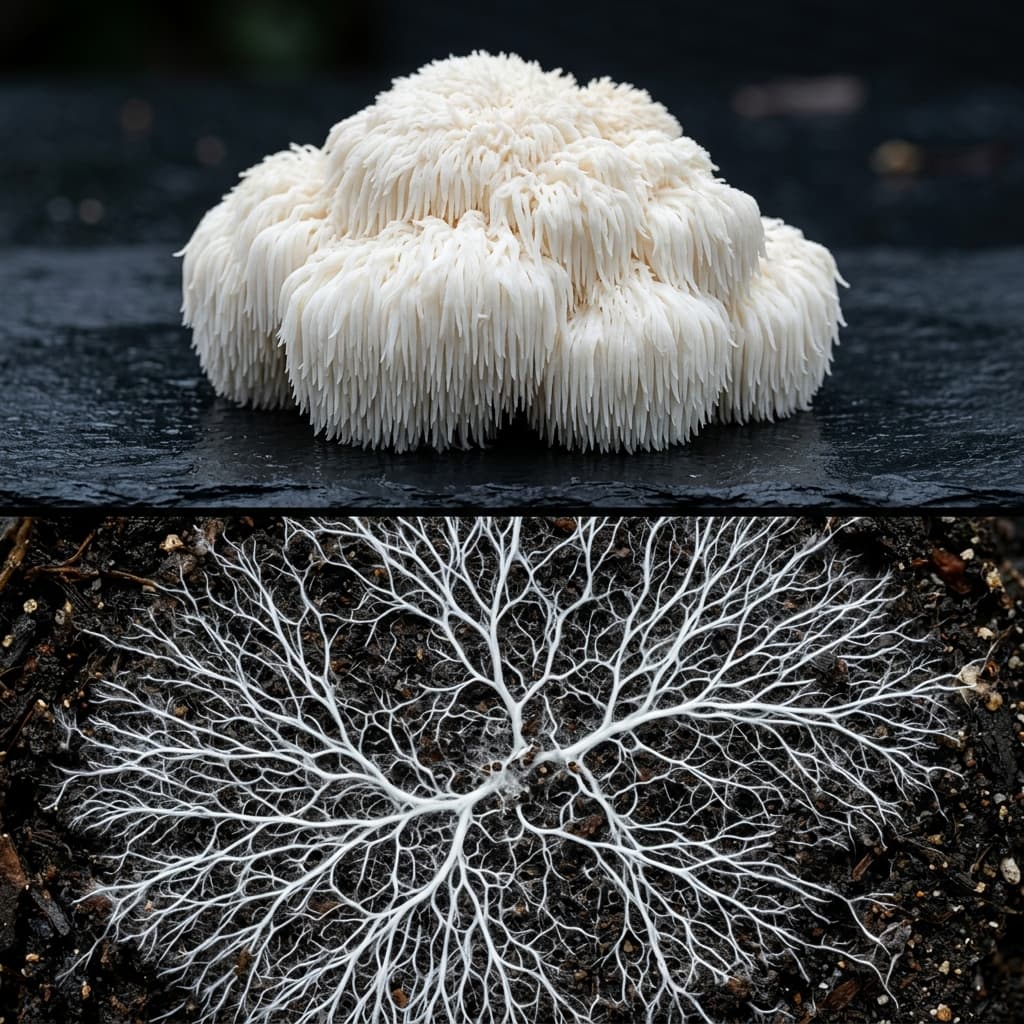
A mushroom has two main structures: the fruiting body (the visible cap and stem you recognize as a mushroom) and the mycelium (the underground 'root' network of thread-like filaments that the fungus uses to absorb nutrients).
Both parts are biologically active, but research consistently shows the fruiting body contains higher concentrations of the primary therapeutic compounds — particularly beta-glucans, hericenones, cordycepin, and triterpenes — than the mycelium alone.
What is 'Mycelium on Grain' (MOG)?
Here's where the quality problem begins. Growing full fruiting bodies is slow, expensive, and requires controlled conditions. Growing mycelium is faster and cheaper — but mycelium needs a food source to grow on, which is typically oats, brown rice, or wheat.
Mycelium-on-grain production: mycelium is inoculated into bags of grain, allowed to grow for several weeks until the grain is colonized, then the entire mixture — mycelium plus grain — is dried and ground into powder. The problem: the grain substrate becomes a significant portion of the final product, often comprising 50–80% of the weight. The remaining 20–50% is actual mushroom material.
This means if you buy a '500mg Lion's Mane capsule' from a mycelium-on-grain brand, you may be getting 100–250mg of actual mushroom content, with the rest being grain starch.
The Testing Evidence
Independent lab testing has repeatedly confirmed the potency gap between fruiting body extracts and mycelium-on-grain products.
A 2017 analysis by Real Mushrooms tested 19 commercially available mushroom products and found that 8 of them contained detectable levels of starch (confirming grain substrate) and had beta-glucan content of 2% or lower — compared to quality fruiting body extracts that test at 20–40% beta-glucans.
A 2020 study in the journal Nutrients analyzed multiple commercial Lion's Mane products and found enormous variation in active compound content — with some products showing essentially no hericenones despite their label claims. Products using fruiting body extracts consistently showed higher active compound levels.
The Mycelium Defense: What Proponents Argue
The mycelium-on-grain position is most prominently advocated by Paul Stamets (Host Defense), who argues that:
1. Mycelium contains unique extracellular compounds not present in fruiting bodies 2. The myceliated grain itself may have health benefits 3. Early-harvest mycelium has different — and potentially complementary — compound profiles to fruiting bodies
These arguments have merit in principle, but the available testing evidence doesn't support the conclusion that mycelium-on-grain products deliver equivalent or superior clinical potency to fruiting body extracts. Most researchers acknowledge that fruiting body extracts are more potent by active compound weight.
How to Identify Quality Mushroom Supplements
Look for these green flags: - 'Fruiting body extract' or '100% fruiting body' clearly labeled - Beta-glucan percentage disclosed (20%+ is good) - Third-party COA available from ISO-certified lab - Low or no starch content (confirm with alpha-glucan vs. beta-glucan ratio) - Dual extraction method specified
Red flags: - 'Mushroom mycelium' or 'myceliated biomass' on the label - No beta-glucan percentage disclosed - 'Proprietary blend' without individual component amounts - Extremely low price per serving (often a sign of low-quality production) - No COA available or only 'available upon request' with resistance
Frequently Asked Questions
Is mycelium completely worthless in supplements?
No — mycelium does contain bioactive compounds, and some research suggests unique compounds in mycelium may have health benefits. The issue isn't that mycelium has no value; it's that mycelium-on-grain production results in a diluted product dominated by grain starch, not mushroom material. If a supplement could guarantee low-grain mycelium with documented active compound levels, it could be a legitimate product. Most commercial products don't meet this bar.
How much does beta-glucan percentage matter?
Beta-glucan percentage is the most reliable proxy for quality because it reflects the density of active immune-modulating compounds in the product. Clinical research on mushroom benefits typically used doses that, back-calculated, correspond to products with 20–40% beta-glucan content. Products testing at 1–5% would require 4–40x the serving size to deliver equivalent benefit.